


MOI VER
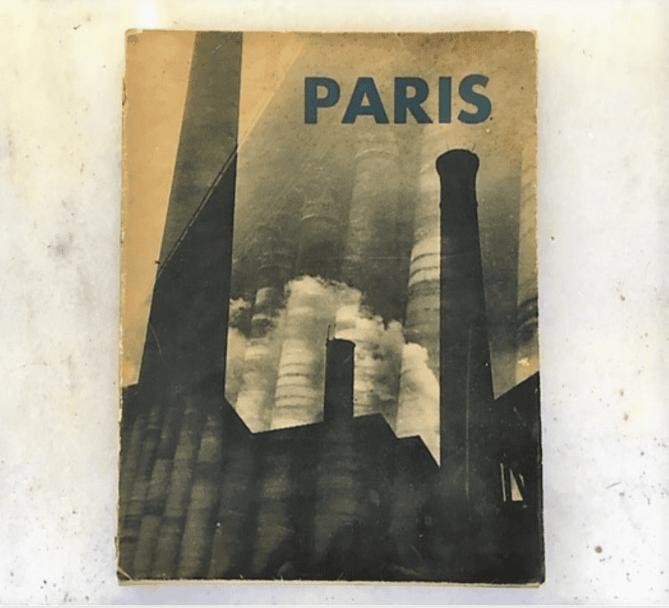
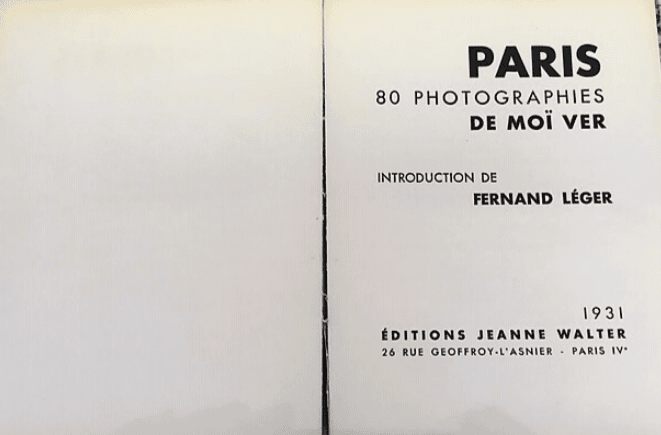
Paris: 80 photographies.
Introduction by Fernand Léger.
Paris: Jeanne Walter, 1931.
4° (294 x 220 mm).
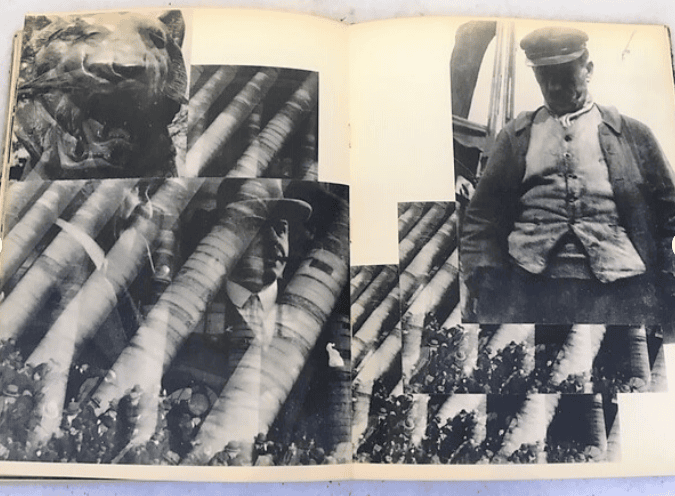
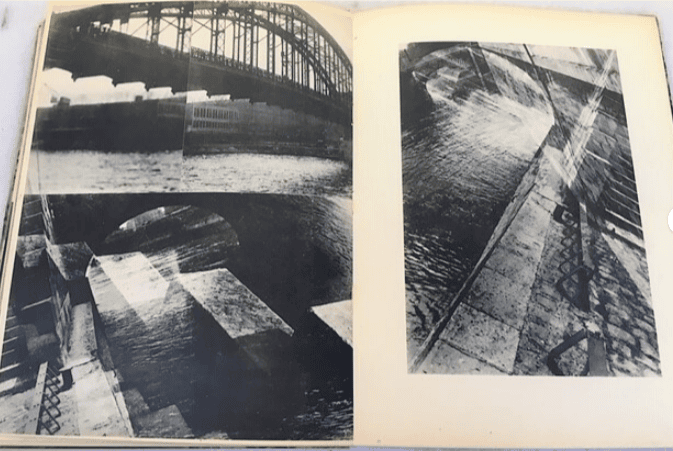
78 pages of black and white photomontages.
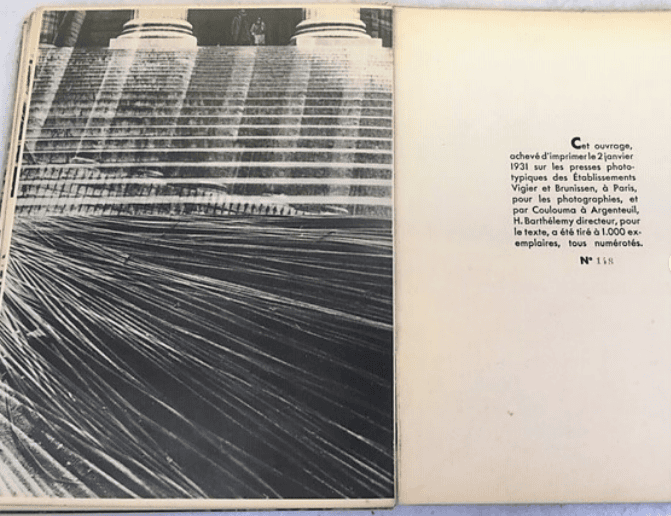
Copy number 148 of 1000.
NOT FACSIMILAR
ORIGINAL FIRST EDITION.
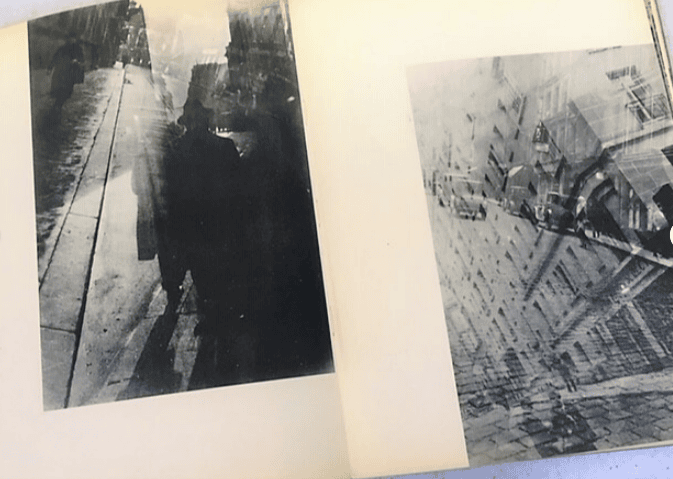
One of the most important (and rarest) photobooks in the history of the medium, Moï Ver’s Paris, first published in 1931 by Éditions Jeanne Walter, was avant-garde in its layered photos of the city’s streets and industry, not to mention its graphic layout. Yet tragedy soon struck: 95% of production was destroyed by a flood of the Seine with only around 40 books surviving.
(Although he does not say it anywhere in the book, just to not lose his story I tell you that this book was brought in 1939 by the Austrian artist Mariette Lydis to Argentina after his stay in Paris.)
During 1927 Moï Ver (born Moses Vorobeichic, changed later to Moshé Raviv-Vorobeichic) studied at the German Bauhaus in Dessau, under such luminaries as Moholy-Nagy, Josef Albers, Paul Klee and Wassily Kandinsky. Following his time at Dessau Moï Ver had a remarkably productive period. Paris 80 photographies de Moï Ver was published by Editions Jeanne Walter. His visionary style of imagery and avant-garde layouts have inspired many photographers and art directors since. Paris 80 photographies de Moï Ver contains collages and double exposures which are not known to exist as actual photographic prints. It is as if the photographer purposefully chose the book as the ultimate form of photographic expression. Arguably Paris established the photobook as an independent medium and art form. Surrealist and Bauhaus influences are visible, as well as the work of artists such as Man Ray or Hannah Höch. Fritz Lang’s monumental movie Metropolis or Walther Ruttmann’s movie Berlin – Die Synfonie der Grosstadt both premiered in 1927. Moï Ver would certainly have seen both of these films and there are obvious references in his own work. In Paris, his own metropolis is in motion, buzzing with kinetic, practically radium-induced, energy.


